How to Cook Duck Breast at Home (Crispy Skin, Juicy Meat)
Duck breast may look like something reserved for restaurants, but the cooking itself is straightforward once you understand the process. The key is to render the fat slowly and stop at the right temperature. This method focuses on crisp, golden skin and juicy, rosy meat. With a little patience, you get reliable results that work just as well for a weeknight dinner as they do for a special meal.
Disclosure: This post may contain affiliate links. This means I get a small commission if you decide to make a purchase through my links at no extra cost to you.

Get set up for success before the pan hits the heat
Duck breast cooks best when you start with the right cut and a little prep. Most grocery store duck breast is Pekin, which has enough fat under the skin to render slowly and turn crisp. Larger Moulard breasts have more fat and may take a bit longer. Wild duck is leaner and cooks faster, so aim slightly rarer and watch the heat closely. Do this quick prep:
- Pat it very dry with paper towels, especially the skin.
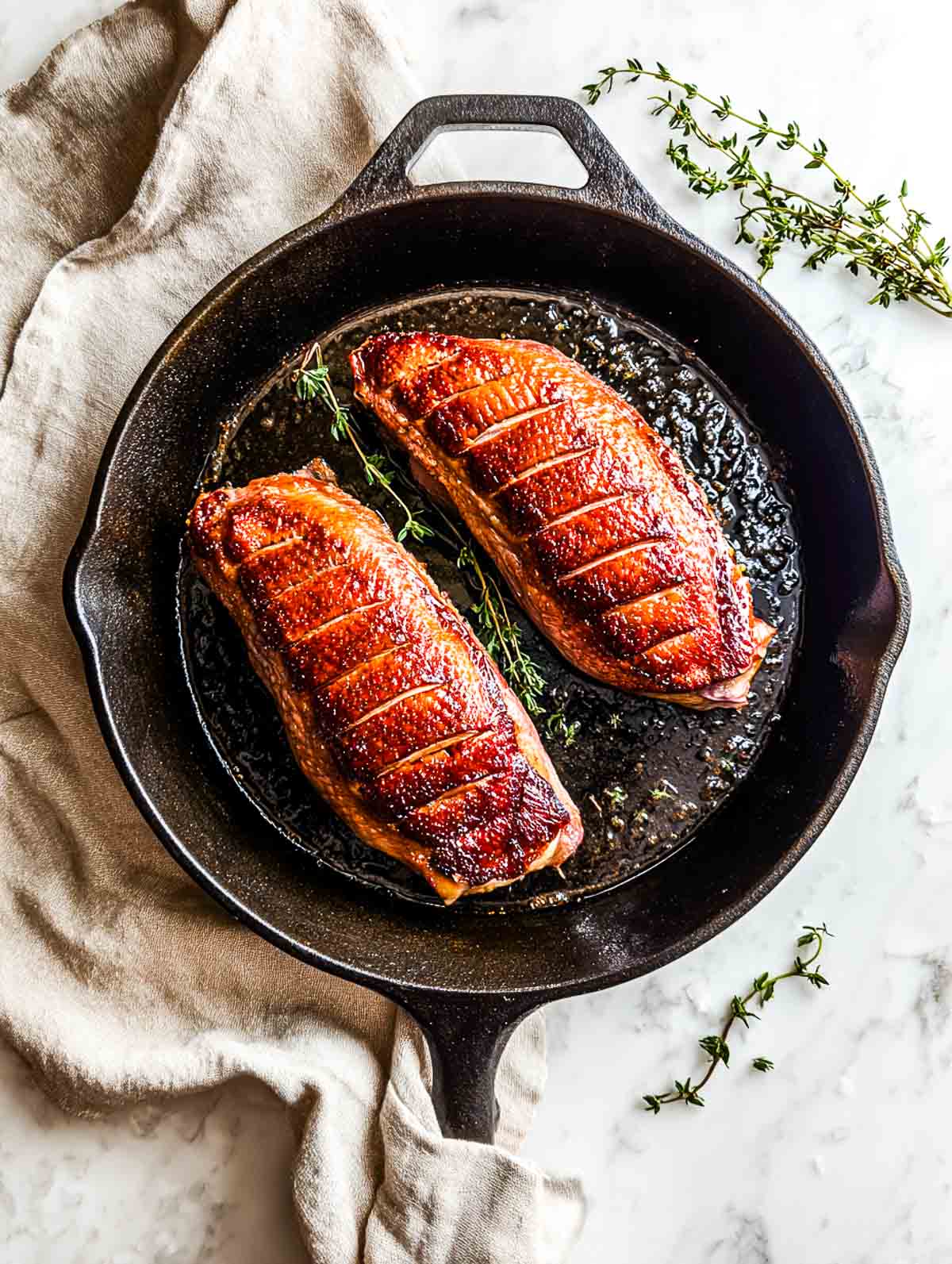
- Score the skin in a shallow crosshatch pattern, about ½-inch apart. Cut through skin and fat, but don't slice into the meat.
- Season both sides with salt and pepper. Seasoning right before cooking helps keep the surface dry so it browns better.
- If you have extra time, letting the duck sit uncovered in the fridge for a few hours helps dry the skin further.
Common Duck Breast Mistakes (and How to Fix Them)
- Skin browns too fast or burns. The heat is too high, or the pan started hot. Duck breast should begin in a cold pan so the fat renders slowly instead of scorching.
- Fat stays rubbery under the skin. The fat hasn't fully rendered yet. Lower the heat and give it more time skin-side down. Shallow, even scoring also helps the fat melt evenly.
- Meat turns dry or chewy. The duck breast was cooked too far past medium. Use a thermometer and keep the time on the meat side short. Leaner or wild duck cooks especially fast.
- Skin won't crisp. Moisture is usually the issue. Pat the skin very dry before cooking, and avoid crowding the pan, as this traps steam.
- Center feels slightly underdone after slicing. Return the slices to the warm pan for 20 to 30 seconds. This finishes the meat gently without ruining the skin.
Easy Pan Sauce Ideas and Side Pairings
- Pour off most of the rendered duck fat after cooking and save it. Leave about a teaspoon in the pan and deglaze with a splash of stock or water, scraping up the browned bits.
- Add a fruity note such as orange juice, apple cider, or a spoonful of jam. Simmer briefly until glossy, then whisk in a small knob of butter off the heat.
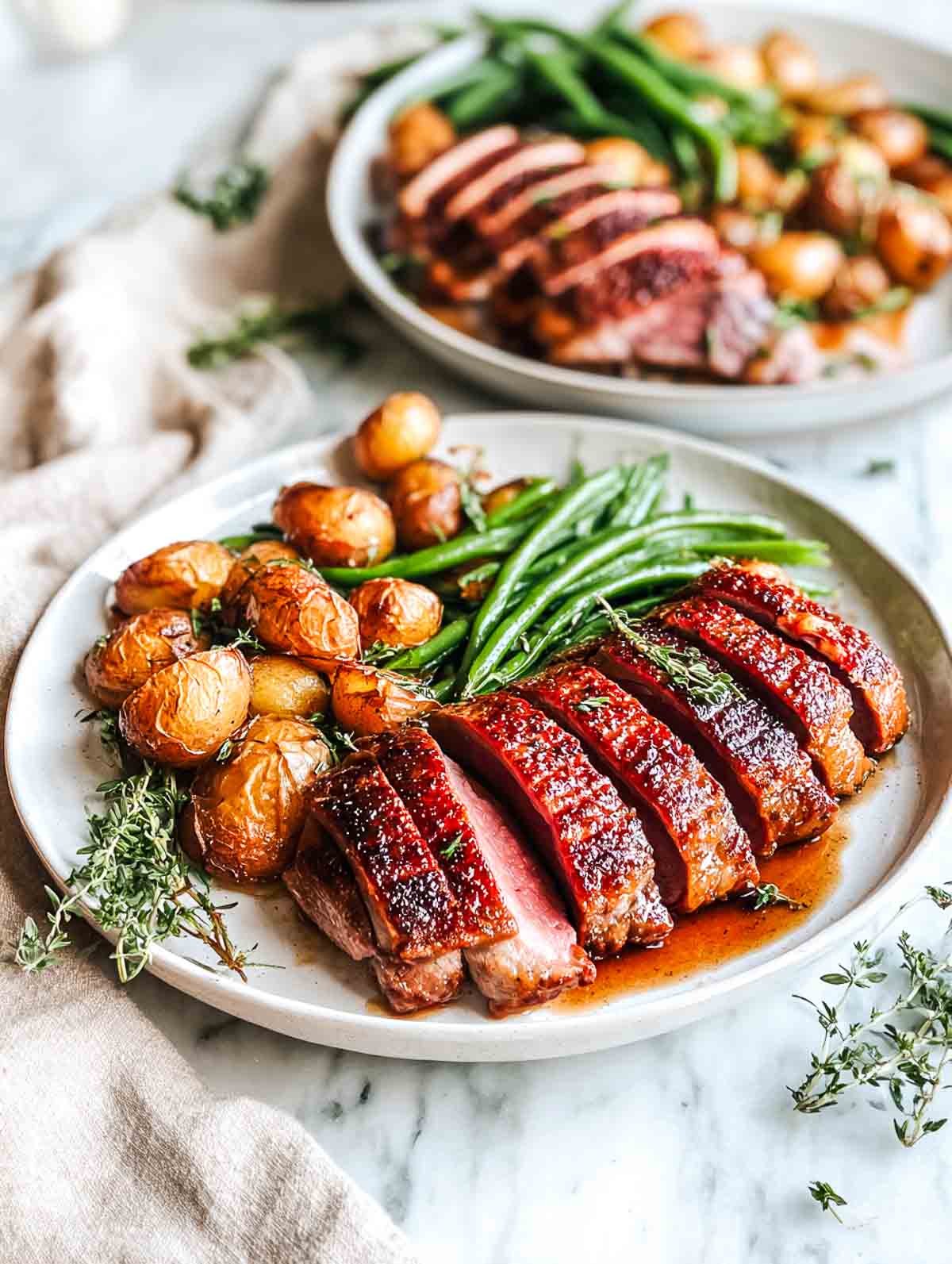
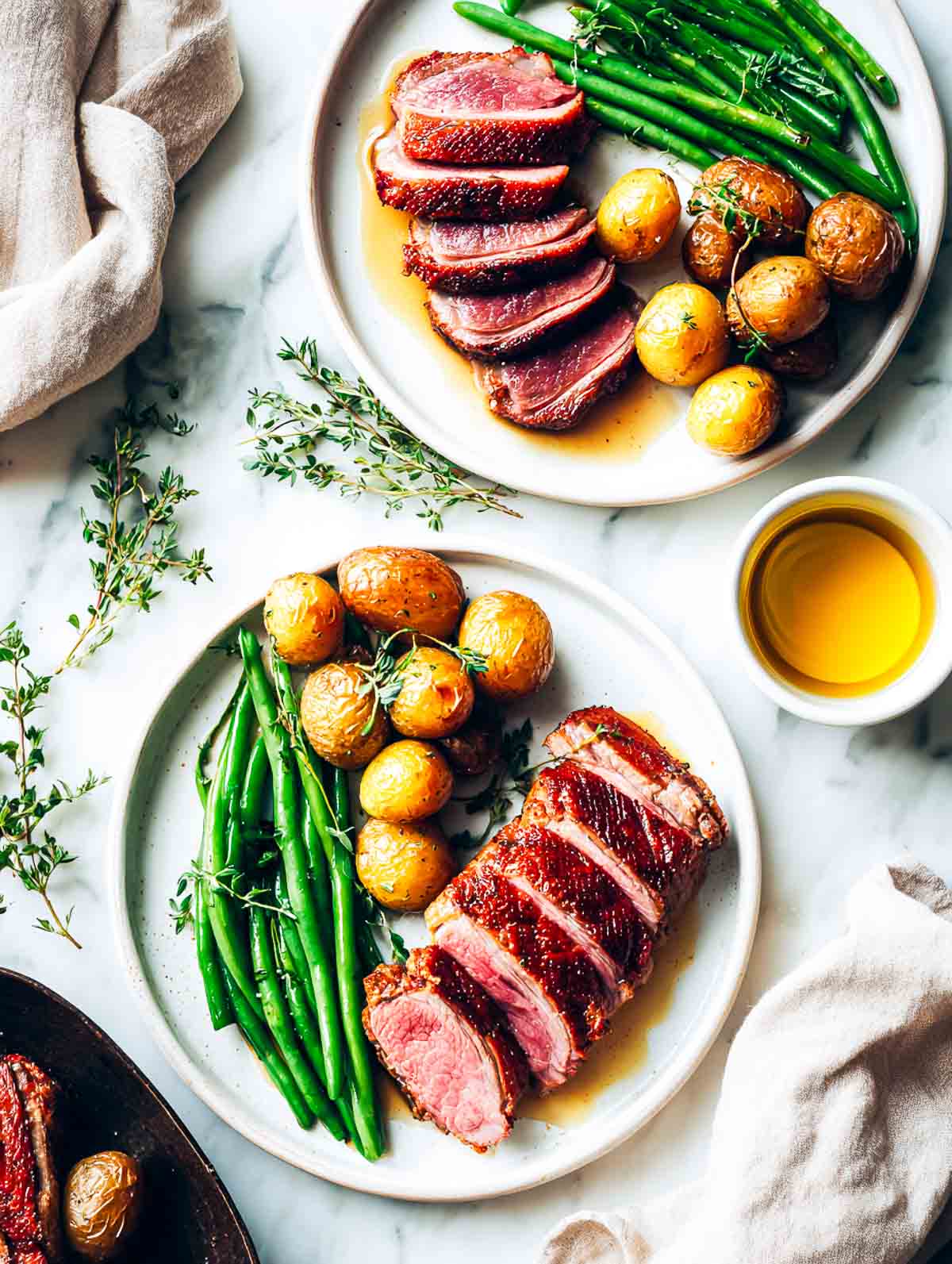
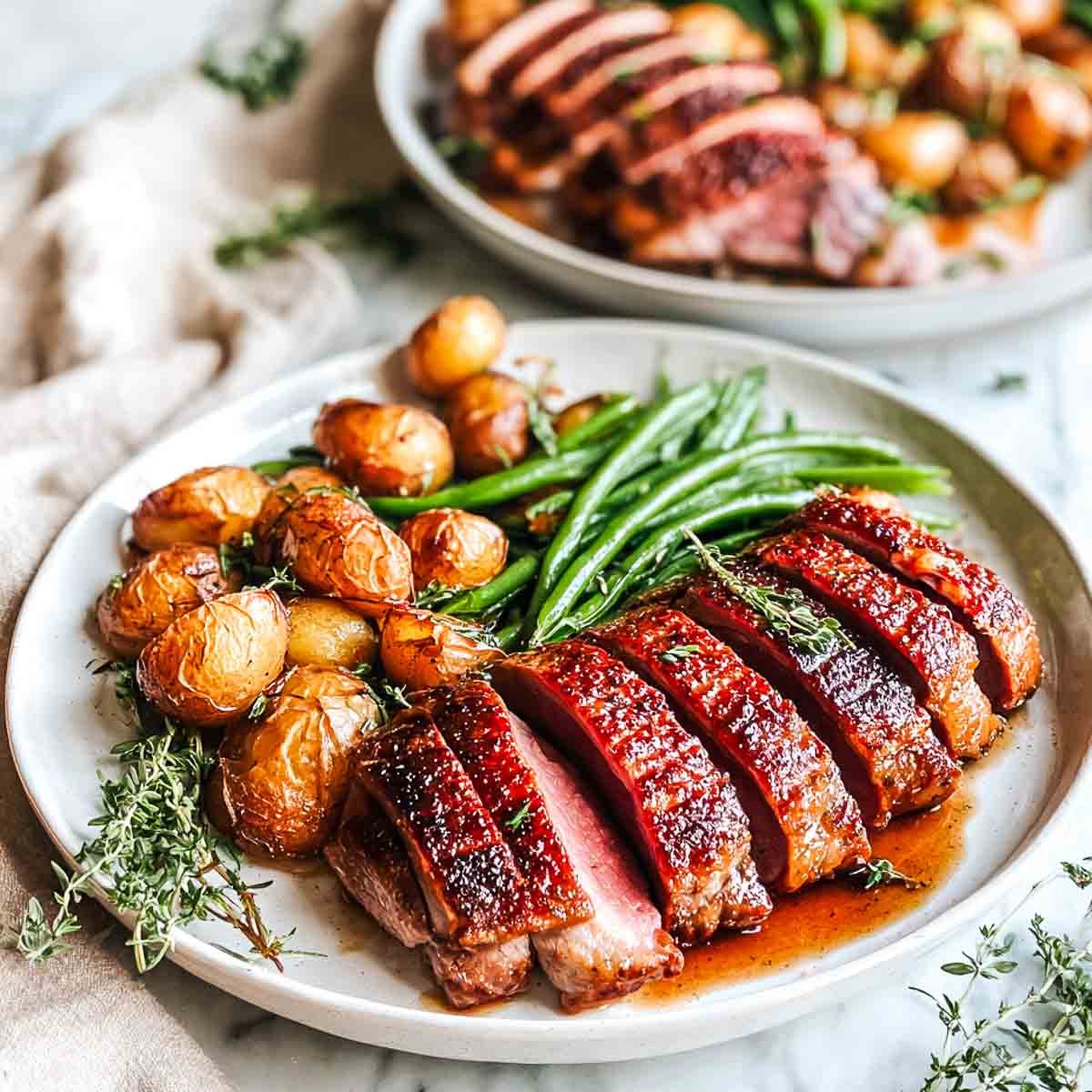
- Serve the duck with simple sides that balance the richness, like roasted sweet potatoes, Brussels sprouts, green beans, or a crisp salad with a tangy dressing.
- For a little contrast, a light drizzle of hot honey or a pinch of chili flakes works well without overpowering the meat.
- Strain the reserved duck fat through a fine sieve and store it in the fridge. Use it later for roasting or air frying vegetables.
If this recipe helped you cook duck breast at home, please leave a 🌟 star rating and let me know how it went in the 📝 comments below.
Equipment
- Oven-safe skillet
Ingredients
- 2 duck breast skin-on
- ½ teaspoon salt
- ½ teaspoon pepper
Instructions
- Preheat oven to 350℉.
- Score and Season: Using a sharp knife, gently score the skin of the duck breasts in lines or a criss-cross pattern. Be careful not to cut into the meat. This helps render the fat and crisp up the skin. Generously season both sides of the duck breasts with salt and pepper.
- Start with a cold pan: Place the duck breasts skin-side down in a cold pan, then gradually heat to medium-high. Let the skin cook for about 9-10 minutes, depending on the thickness of the breast, until the fat has rendered and the skin is golden brown and crispy.
- Flip the Duck: Once the skin is crispy, flip the breasts over and cook the other side for about 1-2 minutes to sear the meat.
- Finish in the oven: Transfer the pan to the preheated oven and cook for 5-7 minutes for medium-rare and 7-8 minutes for medium. The internal temperature should be 130℉-145℉. The meat should feel soft but spring back slightly when pressed.
- Rest the Meat and Serve: Remove the duck breasts from the oven and let them rest for about 10 minutes, skin side up, before slicing. Slice the duck breast thinly and serve it with your favorite sides like roasted vegetables, mashed potatoes, or a fruit-based sauce such as cherry or orange.
Notes
- Don't overcook: Duck breast is best served medium-rare or medium. Overcooking can make it tough.
- Save the fat: The rendered duck fat is delicious and can be used for cooking other dishes.
- Resting Time: Always let the duck breast rest for about 5 minutes after removing it from the oven.
- Using a Meat Thermometer: To ensure accuracy, it's best to use a meat thermometer to check the internal temperature.
- Thickness of the Breast: Cooking times may vary based on the thickness of the duck breasts, so adjust accordingly.