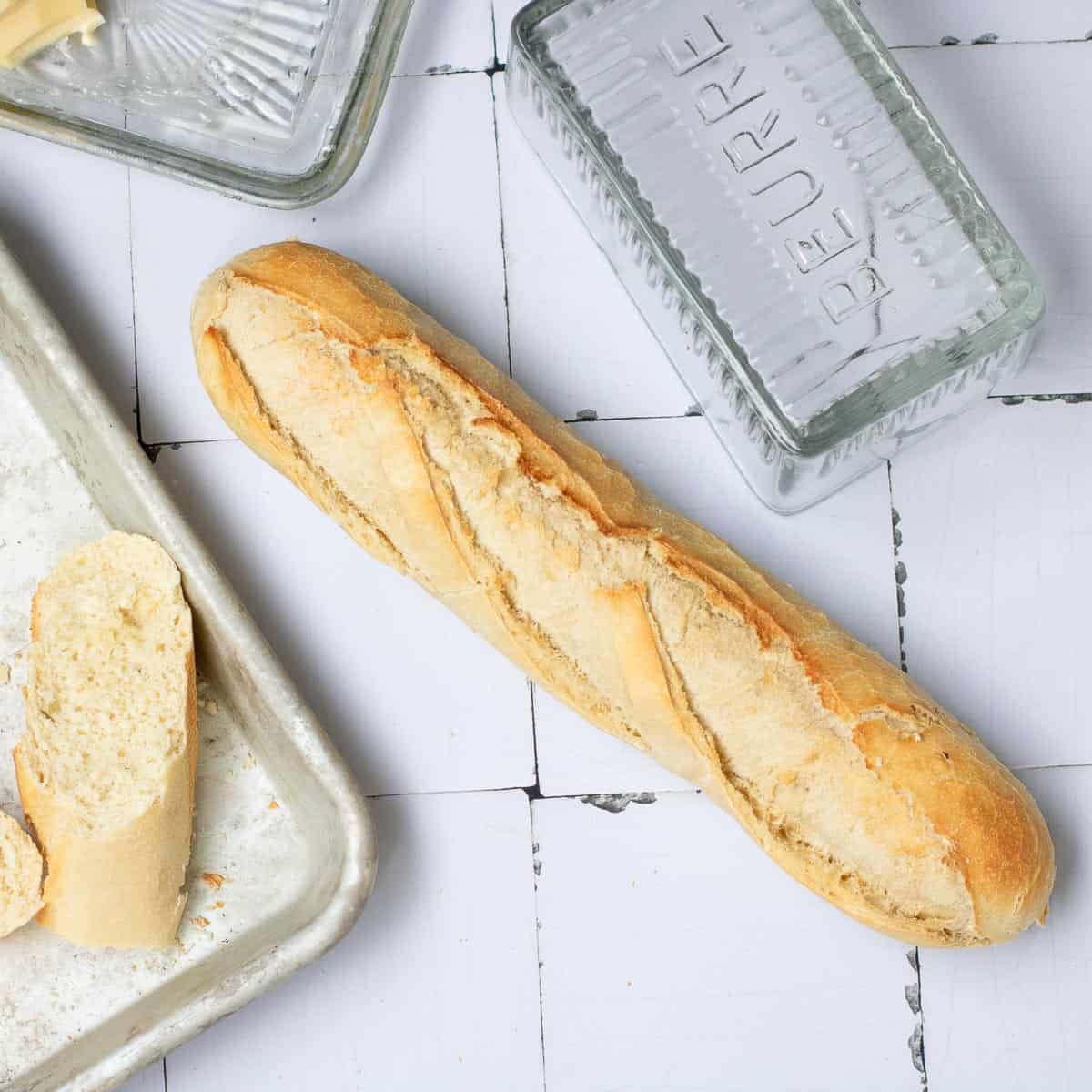
Servings: 8 servings or 2 baguettes
Equipment
Ingredients
- 4 cups bread flour (around 520 grams)
- 2 teaspoons salt
- 2 teaspoons sugar
- 1 packet instant yeast see notes
- 1½ cups water warm (around 100℉)
Instructions
- In a large mixing bowl, combine the flour, salt, sugar, and instant yeast. Make a well in the center and pour the warm water into it. Mix with a wooden spoon until a rough dough forms.
- Transfer the dough to a lightly floured surface. Knead for about 10 minutes until the dough becomes smooth, elastic, and slightly sticky. If it’s too sticky, add a little more flour.
- Shape the dough into a ball and place it in a lightly oiled bowl. Cover the bowl with a damp cloth or plastic wrap. Let it rise in a warm place for 1-2 hours or until doubled in size.
- After the first rise, gently deflate the dough and turn it out onto a floured surface. Divide the dough into two equal pieces.
- Working with one piece at a time, shape the dough into a rectangle. Fold the long edges into the center, then roll the dough into a log, pinching the seams closed. Roll it back and forth to elongate the dough to about 30-35 cm (12-14 inches) long.
- Place the shaped dough on a baking tray. Cover the dough loosely with a cloth and let it rise for 45 minutes to 1 hour.
- Preheat the oven to 480℉ and add a shallow pan with one cup of water on the bottom rack. This is called a water bath and it will create steam, which helps form a crispy crust.
- Using a sharp knife, make 3-4 diagonal slashes on the top of each baguette. This helps control the expansion of the bread as it bakes.
- Place the tray with the baguettes in the preheated oven with steam. Bake for 10 minutes, and then remove the water bath pan. Keep baking the baguettes for 10-15 minutes until the crust is golden brown, and the baguettes sound hollow when tapped on the bottom.
- Transfer the baked baguettes to a wire rack to cool completely before slicing.
Notes
- I am using instant yeast in this recipe, which does not require blooming. If you use active dry yeast, bloom it in sugar and water before adding it to the flour.
- Steam is essential for that golden, crisp crust. Place a tray of water at the bottom of the oven when preheating. If you have a Dutch oven or baking cloche, these can also trap steam effectively.
- Baguettes should be proofed until just slightly springy to the touch. Over-proofing can cause them to deflate or spread during baking, losing their classic shape.
- Allow the baguettes to cool completely on a wire rack before slicing. Cutting too soon releases steam, making the crumb gummy instead of airy.
Nutrition
Calories: 232kcal | Carbohydrates: 47g | Protein: 8g | Fat: 1g | Saturated Fat: 0.2g | Polyunsaturated Fat: 0.5g | Monounsaturated Fat: 0.1g | Sodium: 585mg | Potassium: 71mg | Fiber: 2g | Sugar: 1g | Vitamin A: 1IU | Vitamin C: 0.003mg | Calcium: 11mg | Iron: 1mg
Tried this recipe? Share it Today!Mention @lentillovingfamily or tag #lentillovingfamily!